
Most people think love is measured by what happens in someone's presence. We tend to think of love as the words we say directly to someone, the affection we show them, the sacrifices we make for them, and the ways we celebrate them while they are standing close enough to hear it.
But I have come to believe that some of the truest measures of love happen in rooms they never enter. The real test of love is often found in a person's absence.
It is found in the conversations that happen after they leave, when their name comes up and they are not there to defend themselves, clarify a misunderstanding, or provide context. It is found in the moments when nobody would know whether you protected their dignity or participated in their dismantling. It is found in what you allow to be said, what you refuse to entertain, and how you speak about someone when there is nothing to gain from being loyal to them.

Feeling the Absence
Absence is one of the most vulnerable positions a person can occupy. When someone is not in the room, they lose control of their own narrative. They cannot explain a decision that appears questionable from the outside.
They cannot add context to a story that is being retold. They cannot remind people of their humanity when frustration, disappointment, or resentment begin rewriting who they are. All they have left is the character of the people speaking about them.
Over the years, I have watched relationships fracture not because of conflict itself, but because of what happened in rooms where one person was absent. A mistake became an identity. A disappointment became a permanent character trait. A painful moment became the entire story.
Human beings have an unfortunate tendency to flatten one another. We reduce people to the worst thing they have done, the most hurtful thing they have said, or the season of life in which they struggled the most. In doing so, we forget that no single moment tells the whole story of a person.

But Love Changes Things
To love someone means refusing that reduction. It means holding onto complexity even when it would be easier to choose certainty. It means remembering that people are more than their mistakes, more than their failures, and more than the moments that disappointed us.
This does not mean ignoring harm, excusing destructive behavior, or avoiding difficult truths. In fact, genuine love requires honesty. It requires accountability. It requires a willingness to address problems directly rather than pretending they do not exist.
But there is a difference between telling the truth about someone and stripping them of their humanity while doing it.
The distinction matters because love and loyalty are often misunderstood. Healthy loyalty is not blind allegiance. It is not protecting behavior that causes harm or demanding silence when accountability is necessary.
Healthy loyalty protects a person's dignity while still allowing room for truth. It says, "I will speak to you about my concerns before I speak about you to others." It refuses to build intimacy through gossip. It refuses to create connection through shared contempt. It recognizes that another person's humanity deserves care, even when the relationship is strained.
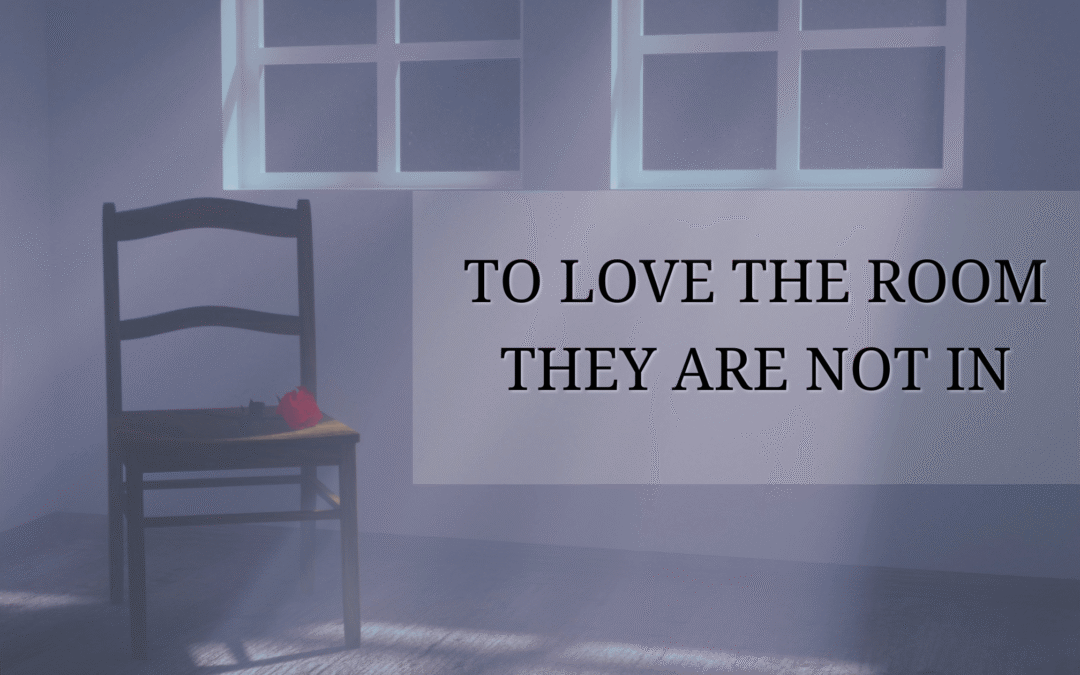
I think this becomes even more meaningful after loss. When someone dies, every room becomes the room they are not in. The empty chair at the table, the family gathering, the conversations between friends, every space becomes a place where their story is now carried by others. They can no longer explain themselves.
They can no longer clarify a memory. They can no longer remind us who they were beyond a single moment in time. Their dignity rests entirely in the hands of the living.
Love As Stewardship
One of the things grief has taught me is that love often becomes an act of stewardship. We become the keepers of stories, memories, and unfinished conversations. We decide whether the people we have lost are remembered as whole human beings or reduced to isolated moments. We decide whether their names are spoken with care or carelessness. We decide whether we will hold their humanity with the same tenderness we wished others would extend to us.
The older I get, the less interested I am in performative expressions of love and the more interested I am in integrity. Who are we when the person we love is not watching? Who are we when there is nothing to gain from defending their dignity? Who are we when silence would be easier than speaking up? The answers to those questions reveal far more about the depth of our love than any public display ever could.
We often think love is proven in proximity, but I am no longer convinced that is true. I think some of the deepest expressions of love happen in absence. They happen in the quiet decisions we make when someone is not present to witness them. They happen when we choose to hold another person's humanity with care. They happen when we remember that people are most vulnerable when they are not in the room, and we decide to make that room safe anyway.
To love someone means their absence does not make them disposable. It means their dignity remains important even when they are gone. It means understanding that love is not only how we treat people face to face. It is how we steward them when they cannot see us.
To love someone is to love the room they are not in.
Safety After Grief
Whose name is safe with you? When someone you love leaves the room, does your language about them change? Have you ever participated in a conversation that reduced someone to a single mistake, a single season, or a single story? Have you ever remained silent while someone else's dignity was being chipped away because speaking up felt uncomfortable? Can you hold someone accountable without stripping them of their humanity?
Who has loved you in rooms you were not in? Who protected your name when you were not there to protect it yourself?
And perhaps the hardest question of all: If the people you love could hear every conversation you have had about them in their absence, would they feel safe with you?
You do not need to answer these questions today. You do not need to defend yourself against them either. Simply notice what arises.
Because love is not only revealed in how we treat people when they are present. It is revealed in how we carry them when they are not.
Related Articles:

Life Didn’t Get The Memo

The Weight Of Being Fine
One of the most misunderstood forms of suffering is the suffering that continues to function. We tend to believe that if someone is struggling, there will be visible evidence. We imagine grief as tears, depression as isolation, and trauma as obvious dysfunction. We...
Life Didn’t Get The Memo
The Weight Of Being Fine
One of the most misunderstood forms of suffering is the suffering that continues to function. We tend to believe that if someone is struggling, there will be visible evidence. We imagine grief as tears, depression as isolation, and trauma as obvious dysfunction. We...
Life Didn’t Get The Memo
The Weight Of Being Fine
One of the most misunderstood forms of suffering is the suffering that continues to function. We tend to believe that if someone is struggling, there will be visible evidence. We imagine grief as tears, depression as isolation, and trauma as obvious dysfunction. We...
0 Comments