
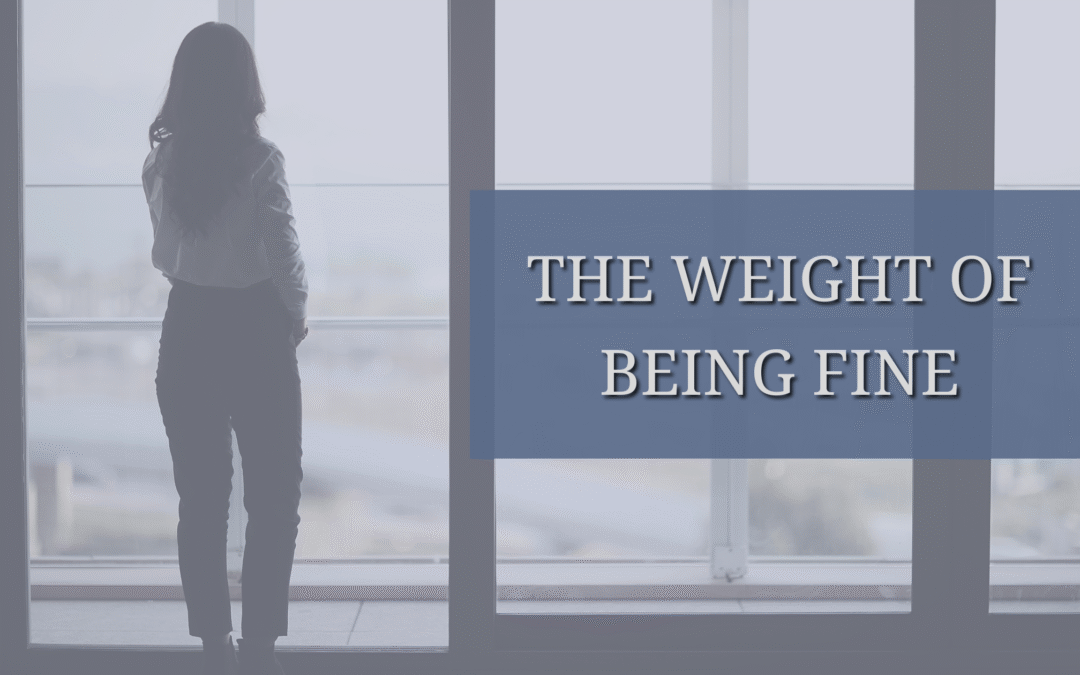
One of the most misunderstood forms of suffering is the suffering that continues to function. We tend to believe that if someone is struggling, there will be visible evidence.
We imagine grief as tears, depression as isolation, and trauma as obvious dysfunction. We assume pain announces itself.
Yet some of the most wounded people I know are highly productive. They get up every morning, raise children, go to work, care for aging parents, answer emails, pay bills, volunteer, and continue showing up for everyone around them. They function so well that neither they nor anyone else recognizes how much pain they are carrying.
After Zach died, there were days when I could barely breathe and days when I was somehow managing life as if nothing had happened.
Looking back, I can see how easily functionality was mistaken for healing. People saw me working, helping others, and handling responsibilities. They saw evidence that I was surviving.
What they could not see was that survival and healing are not the same thing. Surviving is about getting through the day. Healing is about allowing yourself to be changed by what happened. Those are very different processes, yet many of us spend years confusing one for the other.

Grief Does Not Disappear Because We Ignore It
For a long time, I believed that if I kept moving forward, I would eventually leave the pain behind. I thought healing was something that happened through endurance. If I worked hard enough, stayed busy enough, and remained focused on what needed to be done, I assumed the grief would eventually loosen its grip.
Instead, I discovered something David Kessler writes about often: grief does not disappear because we ignore it.
Grief is patient. It waits. It waits while we build careers, raise families, achieve goals, and convince ourselves we are fine. It waits because what has been lost still matters, and the parts of us affected by that loss are still seeking acknowledgment.
What struck me most after Zach's death was not only the grief I felt for him. It was the realization that his death uncovered grief I had never fully allowed myself to feel. Childhood experiences I had minimized. Losses I had adapted to. Pain I had explained away.
I had spent decades believing that because I survived something, I had dealt with it. In reality, I had simply learned how to carry it.

Being the "Strong One"
I think this is where many people get stuck. We become experts at adaptation. We learn how to function around our wounds rather than through them. We develop identities built around coping. We become the strong one, the responsible one, the caretaker, the achiever, the helper.
These identities often earn us praise because they are useful to the people around us. The problem is that what begins as adaptation can eventually become a barrier to healing. The role that once protected us becomes the role that prevents us from asking for help, slowing down, or acknowledging our own pain.
Pema Chödrön writes about our tendency to move away from discomfort. Not because we are weak, but because uncertainty feels intolerable. When we experience emotional pain, our instinct is often to escape it. We distract ourselves, stay busy, overthink, overwork, overgive, or focus on fixing everyone else's problems.
Anything feels preferable to sitting quietly with our own vulnerability. Yet what we resist does not disappear. It follows us. It shows up in our bodies, our relationships, our anxiety, our exhaustion, and the persistent feeling that something is wrong even when our lives appear successful from the outside.
Struggling Quietly Costs You Energy
Many people assume they are tired because they are doing too much. Sometimes that is true. But often the deeper exhaustion comes from carrying too much.
There is a profound difference between being overwhelmed by responsibilities and being burdened by unresolved pain. Carrying grief takes energy. Carrying fear takes energy. Carrying old wounds, old stories, and old survival strategies takes energy. At some point, the original loss may no longer be the heaviest thing we carry. The heaviest thing may be the effort required to avoid feeling it.
What makes this so difficult is that the world often rewards avoidance.
Productivity is praised. Self-sacrifice is admired. Independence is celebrated. Few people stop to ask what those qualities might be protecting. Few people ask what it costs to always be the strong one.
Over time, we begin to believe our own performance. We become so accustomed to carrying the weight that we no longer question whether it belongs to us.
The Difference Between Endurance And Healing
The question is not whether you can carry it. Most people can carry far more than they should. The question is whether carrying it is allowing you to live fully.
There is a difference between endurance and healing.
Endurance asks, "How much longer can I keep going?" Healing asks, "What am I still afraid to feel?"
That is not an easy question. In fact, it may be one of the hardest questions we can ask ourselves. But it is often the question waiting beneath the exhaustion, beneath the anxiety, beneath the constant need to stay busy.
Because sometimes the weight is not coming from what happened to us. Sometimes the weight comes from how long we have been carrying it alone.
What feelings have you been too busy to feel?
What pain have you mistaken for productivity? What burden have you become so accustomed to carrying that you no longer notice its weight? And if you stopped performing "fine" for just a moment, what might finally ask to be heard?
Related Articles:
Life Didn’t Get The Memo
To Love The Room They Are Not In
Most people think love is measured by what happens in someone's presence. We tend to think of love as the words we say directly to someone, the affection we show them, the sacrifices we make for them, and the ways we celebrate them while they are standing close enough...
Life Didn’t Get The Memo
To Love The Room They Are Not In
Most people think love is measured by what happens in someone's presence. We tend to think of love as the words we say directly to someone, the affection we show them, the sacrifices we make for them, and the ways we celebrate them while they are standing close enough...
Life Didn’t Get The Memo
To Love The Room They Are Not In
Most people think love is measured by what happens in someone's presence. We tend to think of love as the words we say directly to someone, the affection we show them, the sacrifices we make for them, and the ways we celebrate them while they are standing close enough...
0 Comments